The floor desk
The floor is a pattern. Read it before the vote.
Senate Post follows the part of the Senate that decides whether a bill actually moves: the motion, the threshold, the time agreement and the recorded vote. Most coverage begins at the roll call. We begin one step earlier, where the card is set.
Card one
One motion, one card
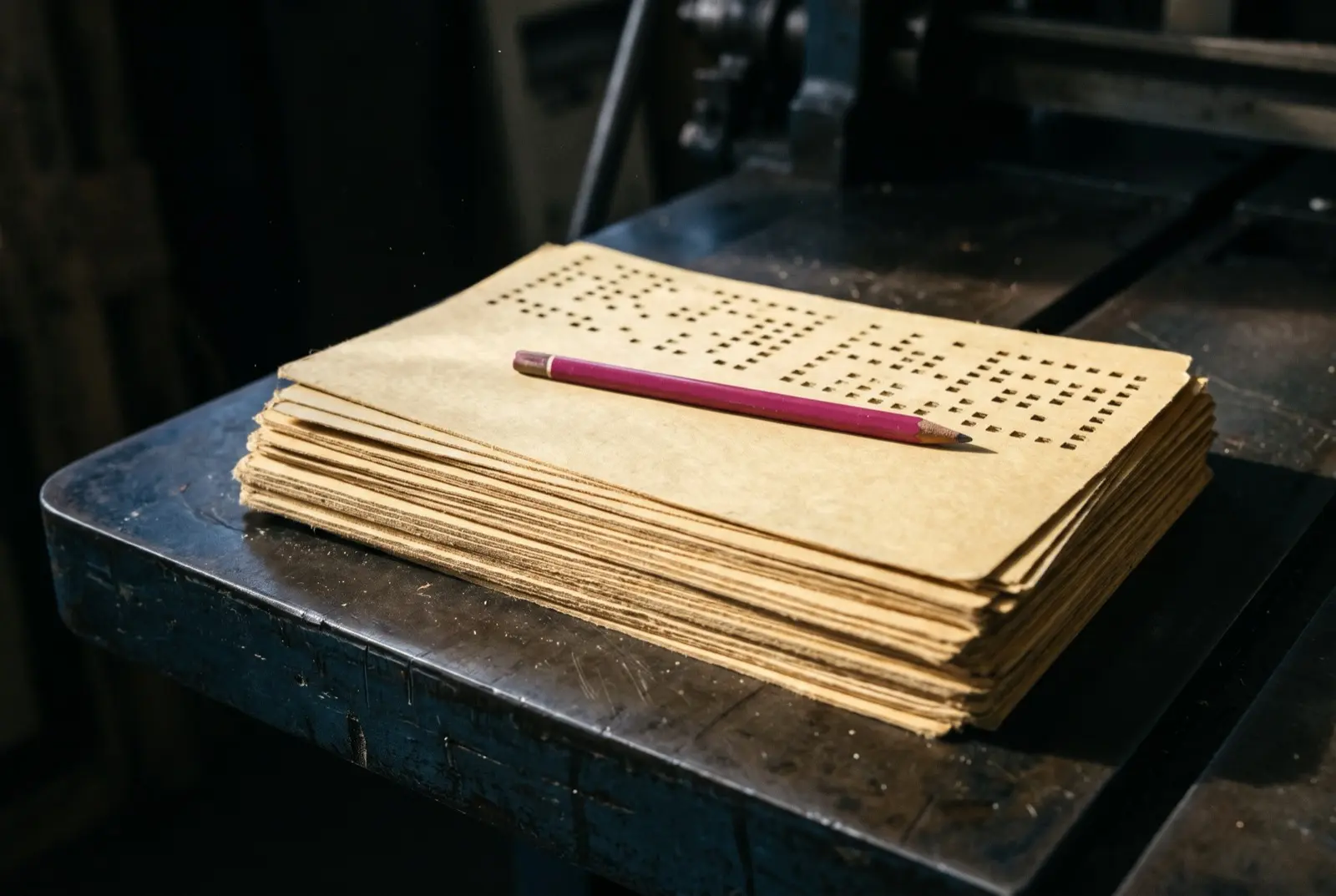
A pattern card is a sheet of card stock with a grid of holes punched through it. The holes are not decoration. Their position tells the machine what to do, and a hole in the wrong place produces the wrong cloth or no cloth at all. Floor procedure behaves the same way. A motion has a place in the order, a threshold it has to clear and a fixed cost in floor time. Move it out of order and the Senate does something else entirely, usually without a vote.
The card beside this column is the one we read most often: cloture on a matter. The grid runs left to right through the session days. Each punched square is a moment when the floor stops being a conversation and becomes a rule.
How to read it
- Cloture
- The only way to end debate over an objection. It costs a day of ripening and 30 hours after it passes.
- Hold
- A private notice that a senator will object. It has no rule text of its own, which is why it is hard to attack.
- Hotline
- The cloakroom check that asks every office whether it objects to a unanimous consent request.
- UC
- Unanimous consent. The fastest route on the floor and the easiest to stop, because one member can object.
Cloture, step by step
- Petition
- A cloture motion is presented with the signatures of 16 senators.
- One motion per matter
- Ripening
- The motion lies over. The vote is taken one hour after the Senate meets on the second calendar day.
- One day
- Debate
- The Senate debates the motion. After cloture is invoked, debate on the matter is capped.
- 30 hours
- Threshold
- Three-fifths of senators duly chosen and sworn must vote to invoke cloture.
- 60 votes
- Aftermath
- Post-cloture time runs, amendments are limited, and the final vote follows unless time is yielded back.
- 30 hours, reducible
Card two
The threshold register
Most floor arguments are arithmetic. Either the votes are there or they are not, and the number that matters depends on the motion in front of the chair. The register below is the short version we keep on the desk. The full set, with notes on what counts as present and voting, sits on the card set page.
Motion / threshold
- Cloture on a matter
- 60
- Rule XXII
- Cloture on a nomination
- 51
- Rule XXII, by precedent
- Veto override
- 67
- U.S. Const. art. I, sec. 7
- Treaty ratification
- 67
- U.S. Const. art. II, sec. 2
- Expulsion of a member
- 67
- U.S. Const. art. I, sec. 5
- Quorum call
- 51 present
- Rule VI
Card three
The recess is where the next vote is built
When the gavel falls, the record does not stop. The bill clerk logs the measures that were introduced, the Journal clerk closes the entries for the day, and the cloakroom starts the count for the next roll call. A time agreement that takes twenty seconds to read on the floor is usually the last step of a day spent on the phone.
We keep a file on that work because it explains most of what looks mysterious from the gallery: why one amendment gets a vote and another dies, why a nomination sits for weeks, why a bill passes by voice vote on a Thursday afternoon. The rule is on the page. The work behind it rarely is.
The desk
One editor, one rule book, no anonymous sourcing
Senate Post is edited by a small desk that reads the calendar and the rule text directly. Every threshold on a card is quoted from the rule or the Constitution, and every correction is dated and marked where the error appeared. If a card is wrong, we would rather fix it in public than quietly replace it.